

PTFE Modified Material
Discover Kaxite Sealing's PTFE Modified Material, an advanced solution offering superior durability and chemical resistance for industrial sealing applications. Its enhanced performance reduces maintenance and boosts efficiency, ideal for engineers and manufacturers in harsh environments. Experience reliable, long-lasting protection that sets new standards in the industry.


What Is PTFE Modified Material?
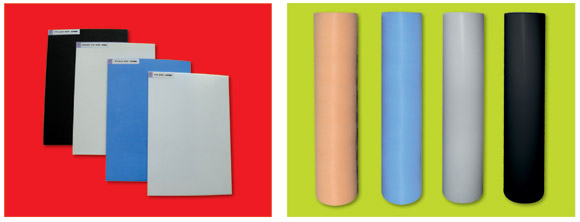
PTFE modified material is made from PTFE suspension resin combined with proper fillers such as glass fiber, glass microsphere, graphite, barium sulfate (BaSO₄), carbon fiber, molybdenum disulfide (MoS₂), polyphenyl, argil, and others. As a leading PTFE Modified Material Manufacturer and PTFE Modified Material Supplier, Kaxite produces Modified PTFE Sheet and machined components through molding or skiving processes.
These fillers address the inherent weaknesses of virgin PTFE — poor creep resistance, low mechanical strength, and limited thermal conductivity — creating a material tailored to specific operational demands. For related products, see PTFE Sheet, PTFE Rod, and PTFE Parts.
ISO 9001 FDA Compliant Grades REACH RoHS USP Class VI Available
Last updated: September 2026
Key Features & Benefits
Kaxite PTFE modified materials are engineered to solve specific performance challenges. Choose the right filler system for your application.
Enhanced Mechanical Strength
- Glass fiber and carbon fiber increase tensile and compressive strength
- Improved creep resistance under sustained load
- Better dimensional stability at elevated temperatures
Superior Chemical Resistance
- PTFE base resists virtually all chemicals
- Fillers maintain inertness in aggressive media
- Ideal for chemical process vessels and piping — see PTFE Gaskets
Optimized Thermal & Tribological Performance
- Graphite and bronze improve thermal conductivity
- MoS₂ and carbon fiber reduce friction and wear
- Extended PV limits for dynamic sealing — see PTFE & PEEK Seals
Technical Parameters
Typical values for Kaxite PTFE modified materials. Actual properties depend on filler type and content. Contact us for certified data sheets.
| Property | Test Standard | Typical Value |
|---|---|---|
| Density | ASTM D792 | 2.1–2.3 g/cm³ |
| Tensile Strength | ASTM D638 | 15–35 MPa |
| Compressive Strength | ASTM D695 | 12–25 MPa |
| Continuous Service Temperature | — | -200°C to +260°C |
| Filler Content | — | 5–40% (by weight) |
| Sheet Thickness | — | 0.5–50 mm |
| Max Sheet Size | — | 1200 × 1200 mm |
| Rod Diameter | — | 10–300 mm |
| Tube OD Range | — | 6–300 mm |
| Dimensional Tolerance | — | ±0.05 mm (machined) |
| Coefficient of Friction | ASTM D1894 | 0.04–0.20 (filler dependent) |
| Water Absorption | ASTM D570 | < 0.01% |
| Dielectric Strength | ASTM D149 | ≥ 20 kV/mm |
Virgin PTFE vs. Modified PTFE
Understanding the trade-offs helps you select the right material for your application. For standard unfilled material, see PTFE Sheet.
| Property | Virgin PTFE | Modified PTFE |
|---|---|---|
| Chemical Resistance | Excellent | Very Good to Excellent (filler dependent) |
| Mechanical Strength | Low | Moderate to High |
| Creep Resistance | Poor | Good to Excellent |
| Wear Resistance | Moderate | Good to Excellent |
| Thermal Conductivity | Low | Improved with graphite/bronze |
| Coefficient of Friction | Very Low (0.04–0.10) | Low to Moderate (0.04–0.20) |
| Best For | Chemical exposure, anti-stick, low load | Load-bearing, wear, high PV, structural |
Filler Systems & Their Benefits
Each filler targets specific weaknesses of virgin PTFE. Kaxite can custom-formulate to match your operating conditions. Related materials include Graphite Sheet and Compression Sheets.
Glass Fiber
Increases compressive strength, improves wear resistance, and reduces creep deformation.
Glass Microsphere
Improves dimensional stability and reduces warpage in molded parts.
Graphite
Enhances thermal conductivity, provides inherent lubricity, and improves wear resistance.
Barium Sulfate (BaSO₄)
Improves chemical resistance and reduces porosity in aggressive media.
Carbon Fiber
Increases stiffness, strength, and creep resistance for high-load applications.
Molybdenum Disulfide (MoS₂)
Reduces friction and improves pressure-velocity (PV) capability.
Polyphenyl
Improves high-temperature performance and dimensional stability.
Argil (Clay)
Reduces cost while maintaining chemical inertness for non-critical applications.
Need help selecting the right filler system?
Typical Applications
PTFE modified materials are used across industries where high temperature, chemical corrosion, and mechanical load converge. Explore related solutions: Gaskets, Expanded Graphite Gaskets, and Sealing Materials.
Mechanical Seals
Faces and seats for pumps, mixers, and compressors handling corrosive or high-temperature media.
Chemical Anticorrosion
Linings, gaskets, and components for reactors, vessels, and piping in aggressive chemical service.
Chemical Process Vessel Seals
Flange gaskets and sealing elements for high-temperature, high-corrosion process equipment.
Machine Tool Guideways Lubrication
Wear strips and sliding elements that provide self-lubrication and reduce stick-slip.
Bridge Construction Support Slider
PTFE sliding pads for bridge bearings, accommodating thermal expansion and seismic movement.
High-Temperature Pipe Sealing
Sealing components for pipelines in high-temperature and highly corrosive conditions.
Why Choose Kaxite for PTFE Modified Material
Kaxite is a specialized PTFE Modified Material Manufacturer and Supplier with over 15 years of compounding and machining experience, serving chemical, mechanical, and infrastructure industries worldwide.
- Material expertise: Deep experience in PTFE compounding, molding, and skiving, with virgin, filled, and modified formulations. See PTFE Parts for machined components.
- Custom formulations: Glass fiber, carbon fiber, graphite, bronze, MoS₂, BaSO₄, polyphenyl, and argil fillers available to match your operating conditions.
- Precision manufacturing: CNC tolerances to ±0.05 mm, CMM inspection for critical dimensions, consistent density and filler dispersion.
- Traceable quality: Certified, traceable PTFE suspension resins and material certificates of compliance for every batch.
- Industry coverage: Serving chemical processing, mechanical sealing, bridge construction, and high-temperature pipe sealing.
- Fast delivery: Stable supply chain with bulk order capability and free sample availability for evaluation.
Frequently Asked Questions
Practical answers about PTFE modified material selection, fillers, compliance, and custom manufacturing.
What is the difference between virgin PTFE and PTFE modified material?
Virgin PTFE is pure, unfilled polytetrafluoroethylene. It offers excellent chemical resistance and low friction but has relatively low mechanical strength and a tendency to creep under load. PTFE modified material incorporates fillers such as glass fiber, carbon fiber, graphite, or bronze to improve compressive strength, wear resistance, thermal conductivity, and creep resistance. The right filler depends on the dominant stressor in your application.
How do I choose the right filler for my PTFE modified material?
Consider the primary challenge. For chemical resistance, barium sulfate or graphite-filled PTFE is often suitable. For mechanical load and wear, glass fiber, carbon fiber, or bronze fillers are preferred. For low friction and high PV limits, MoS₂ or carbon/graphite combinations work well. For bridge bearings and sliding applications, glass fiber or carbon-filled PTFE provides the necessary compressive strength and creep resistance. Kaxite engineers can recommend the optimal formulation based on your temperature, pressure, chemical exposure, and motion profile.
What forms does Kaxite PTFE modified material come in?
Kaxite supplies PTFE modified material as molded or skived sheets in various thicknesses, as well as machined components such as seals, gaskets, wear strips, and sliding pads. Sheet thickness ranges from 0.5 mm to 50 mm, with maximum sheet size 1200 × 1200 mm. Custom dimensions and shapes are available on request. For related forms, see PTFE Rod and PTFE Tube.
Can PTFE modified material be used in food or pharmaceutical applications?
Virgin and certain filled PTFE grades can be formulated to meet FDA and USP Class VI requirements. However, not all fillers are suitable for food or pharmaceutical contact. Kaxite recommends specifying your regulatory requirements when consulting, so the correct certified material grade is supplied. See PTFE Gaskets for sanitary applications.
How does Kaxite ensure quality and consistency of PTFE modified material?
Kaxite uses certified, traceable PTFE suspension resins and carefully controlled filler blends. Molding and skiving processes are monitored to ensure consistent density, filler dispersion, and dimensional tolerance. Every batch undergoes inspection, and material certificates of compliance are available. For critical applications, Kaxite can provide test results for density, tensile strength, and filler content.
Can you produce custom PTFE modified parts or prototypes?
Yes. Custom engineering is a core capability at Kaxite. Kaxite produces custom sheets, machined seals, wear strips, and sliding pads from modified PTFE formulations, and also offers prototype quantities for testing and validation before full production. Share your drawings, operating conditions, and regulatory requirements, and the Kaxite engineering team will propose the optimal material and manufacturing route.
Still have questions about PTFE modified material?
Hot Tags: PTFE Modified Material Manufacturer, PTFE Modified Material Supplier, Modified PTFE Sheet
Related Category
Send Inquiry
Contact Info
-
Address
No. 432 Zhenhai Middle Road, Luotuo Street, Zhenhai District, Ningbo City, Zhejiang China
-
-
Email


